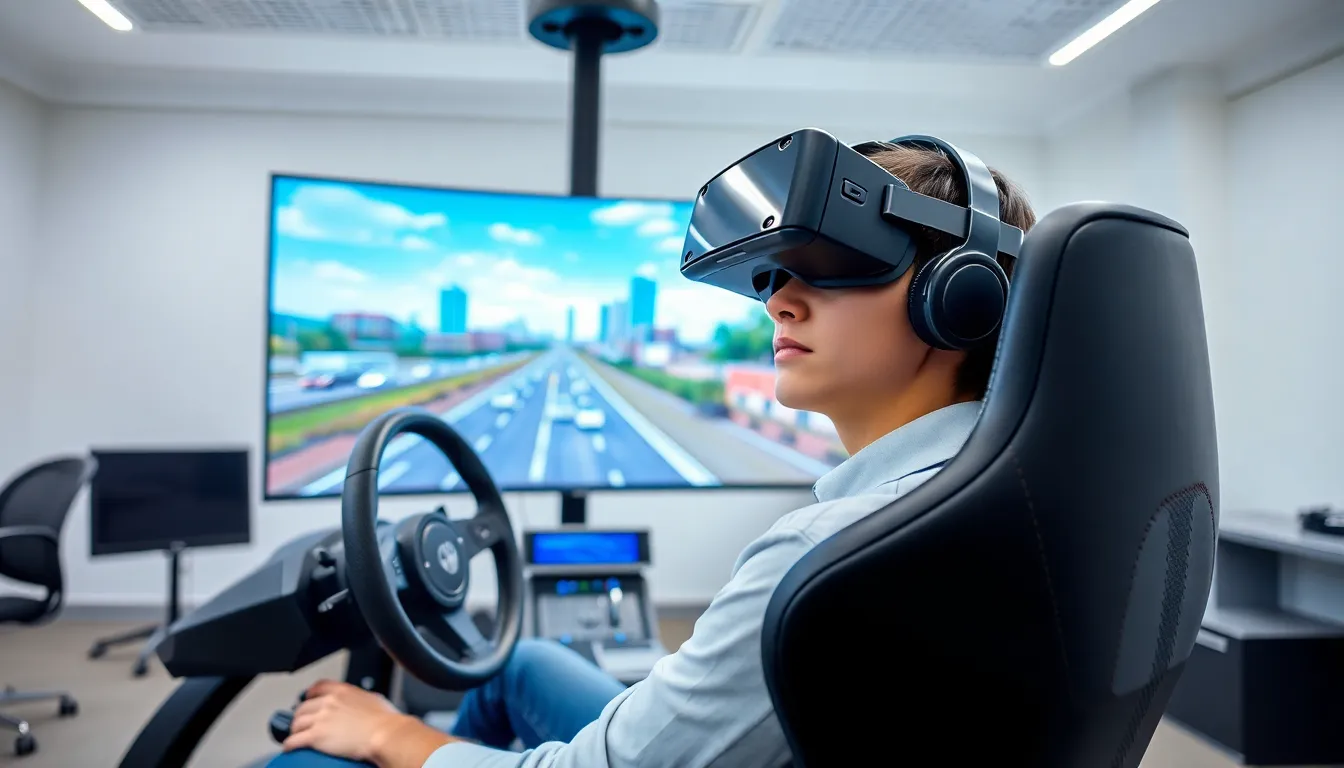
Imagine slipping on a headset and being transported to a bustling city street or a winding mountain road without ever leaving your living room. Welcome to the future of driving, welcome to VR driving simulators. These high-tech innovations are not just for gamers anymore: they offer a myriad of benefits for new drivers and seasoned pros alike. Whether it’s practicing for a driving test or honing skills in a safe environment, VR simulators are turning the mundane task of driving into an exhilarating adventure. And let’s be honest, who wouldn’t want to escape the daily commute without a traffic jam in sight?
What Is a VR Driving Simulator?
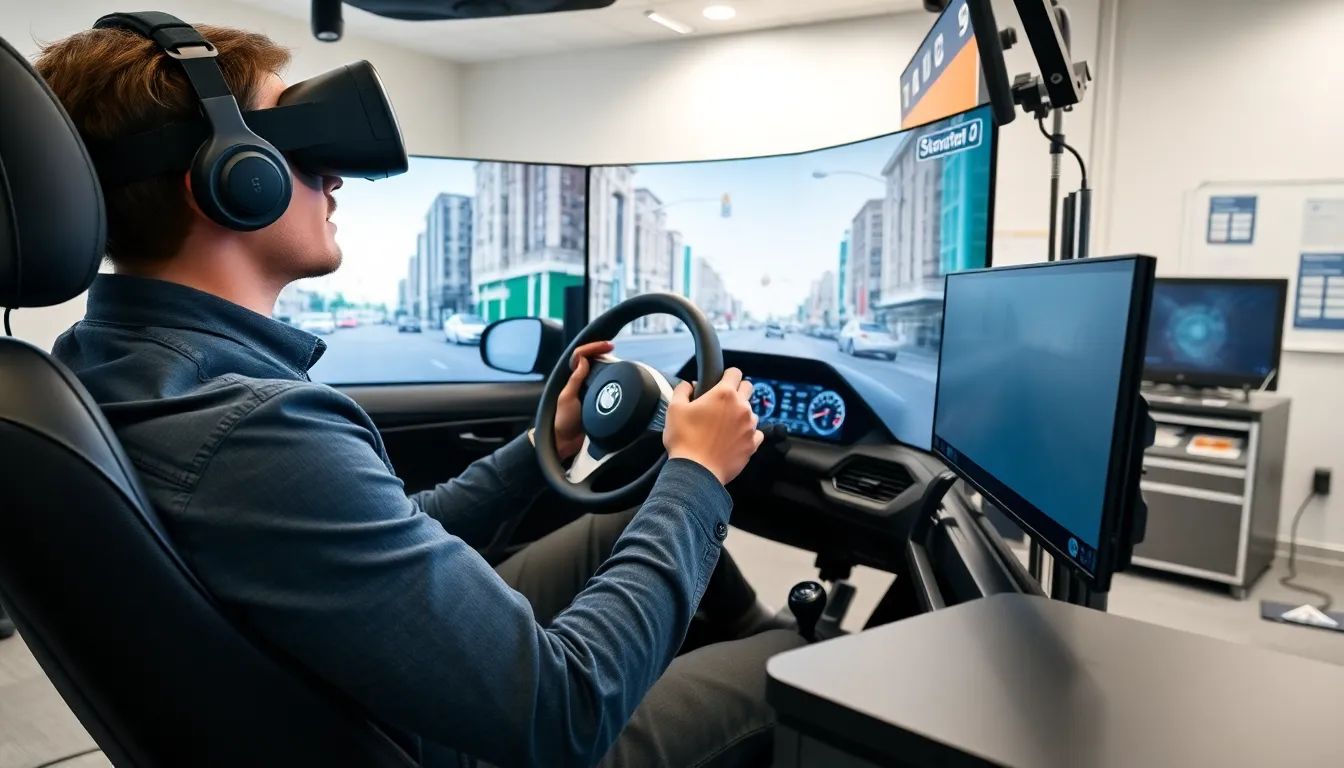
A VR driving simulator is a virtual reality system that replicates the experience of driving a vehicle. Using specialized hardware like VR headsets and motion platforms, these simulators immerse users in lifelike driving scenarios. They can range from basic setups that provide a simple dashboard view to sophisticated systems equipped with realistic steering wheels, pedals, and even motion feedback to mimic the sensation of driving on physical terrain. By simulating various environments and conditions, these simulators allow users to practice their driving skills in a controlled setting. No more worrying about real-life obstacles or weather conditions.
Individuals can experience everything from city driving and highway conditions to challenging scenarios like night driving or inclement weather. Eventually, VR driving simulators aim to provide a safe space for users to learn and improve their driving skills.
Benefits of Using VR Driving Simulators
The benefits of using VR driving simulators are plentiful. First and foremost is safety: new drivers can learn the ropes without the anxiety of being on a busy road. They can crash and loop back to the start without any real-world consequences. Plus, it removes the need for extensive in-person training hours, which can often be stressful for both students and instructors.
Also, VR technology offers an engaging method of learning. With immersive visuals and sounds, learners are more likely to retain information and stay engaged compared to traditional classroom lectures. Besides, feedback can be instant, allowing users to make corrections on-the-fly while experiencing real-time consequences of their actions. This loop of action and feedback is invaluable for reinforcing good habits and honing skills, an area where traditional learning can sometimes fall short.
Types of VR Driving Simulators
VR driving simulators come in various types, each designed to meet specific needs.
- Professional Driving Simulators: These are highly specialized systems often used by driving schools or corporations. Equipped with advanced technology and realistic environments, they offer high fidelity for effective training.
- Gaming-Grade Simulators: Aimed at gaming enthusiasts, this type combines fun with skill development. While they may not be as lifelike as professional models, they are still effective for improving basic driving skills.
- Research and Development Simulators: Used by companies studying vehicular technology, these simulators allow developers to create and test new models in a virtual environment before they hit the market.
- Mobile VR Simulators: These are less complex setups that can be used with standard VR headsets and smartphones. They provide a taste of immersive driving without needing complex hardware.
Key Features to Look For
When considering a VR driving simulator, there are several key features to look for:
- Realistic Graphics: Visual fidelity can greatly impact the overall experience. High-quality graphics allow users to feel as if they are truly behind the wheel.
- Motion Feedback: Force feedback in the steering wheel and pedal systems replicates the sensations of real driving, enhancing realism.
- Variety of Environments: Diverse driving scenarios, from urban landscapes to rural roads, can make training more comprehensive.
- Customizable Settings: Users should be able to adjust factors like weather conditions, time of day, and complexity of the scenarios.
- User-Friendly Interface: Clarity in controls and ease of navigation will enhance the user’s overall experience.
How VR Driving Simulators Enhance Learning and Training
VR driving simulators have made significant strides in enhancing learning and training for drivers. By positioning instructors in a supportive role rather than a controlling one, students feel more at ease in their learning environment.
Simulators allow users to repeatedly practice challenging scenarios until they gain confidence. For example, navigating through heavy traffic or making complicated turns can be practiced multiple times until proficiency is achieved. Also, instructors can monitor performance and provide personalized feedback based on user behavior during the simulation. This targeted approach can identify areas for improvement that might be missed during traditional lessons.
Eventually, the blend of technology and education makes VR driving simulators a modern solution for today’s unique driving challenges.
The Future of VR Driving Simulators
As technology advances, the future of VR driving simulators looks exceptionally promising. Developments in artificial intelligence could lead to more individualized training experiences, adjusting challenges based on the user’s performance in real-time. We may also see enhanced interactions within the simulator, such as pedestrians reacting to driver actions or even the introduction of fellow drivers behaving unpredictably.
Also, as more cities become smart and interconnected, future simulators might integrate real-world data, allowing users to experience real-time traffic conditions and route management. The digital landscape for driving will continue to evolve, augmenting how both amateurs and seasoned drivers approach their learning.